Turmeric for Inflammation and Acid Reflux: Does It Really Work?
Published 22 October 2026 · 3 min read
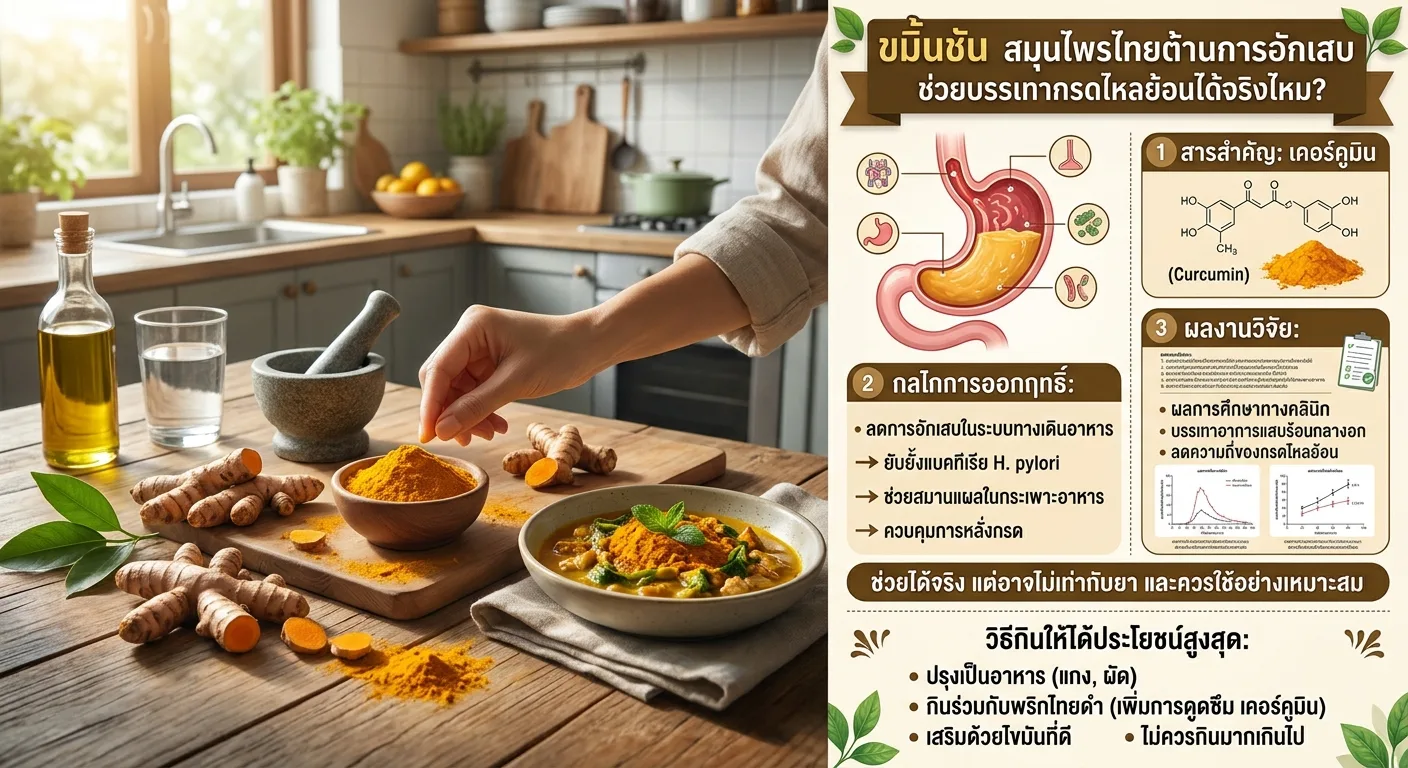
Turmeric is a kitchen staple whose key compound, curcumin, has been studied for its anti-inflammatory effects and stomach-soothing potential. Here's how much it can help, how to take it, and who should be careful.
What Is Turmeric?
Turmeric is a plant in the ginger family whose root has long been used as a spice and in traditional Thai and Ayurvedic medicine. Its active compounds are curcuminoids, especially curcumin, which gives turmeric its yellow-orange color and is the most studied.
In Thailand, turmeric is listed in the National List of Essential Medicines (herbal medicines section) for relieving bloating, flatulence and indigestion.
Anti-Inflammatory Benefits
How it works
Curcumin has antioxidant properties, and laboratory research has found it can inhibit processes and molecules involved in inflammation.
Evidence from human studies
- Knee osteoarthritis: Several studies found turmeric extract reduced joint pain to some degree, with some showing results comparable to NSAID painkillers in osteoarthritis patients.
- General chronic inflammation: Studies on blood inflammation markers exist, but results are inconsistent.
Limitations
Curcumin is poorly absorbed by the body. Many studies therefore use concentrated extracts or absorption-enhanced formulas, which differ from using turmeric in everyday cooking.
Turmeric, Acid Reflux and Stomach Symptoms
Research from Thailand
A study by Thai researchers published in BMJ Evidence-Based Medicine in 2023 found that in patients with functional dyspepsia (indigestion), curcumin relieved symptoms about as well as the acid-reducing drug omeprazole.
What to understand
- That study looked at indigestion, which is a different condition from gastroesophageal reflux disease (GERD), even though some symptoms overlap, such as burning or discomfort in the upper abdomen.
- Direct evidence for GERD is still limited.
- In some people, turmeric may worsen heartburn, especially at high doses or on an empty stomach.
In short, turmeric may ease stomach symptoms for some people, but it isn't right for everyone and isn't a direct treatment for GERD.
How to Take Turmeric for the Most Benefit
- Use it in food — yellow curry, turmeric fried chicken or fish, and rice dishes are the safest way.
- Pair it with fat. Curcumin is fat-soluble, so cooking with oil or coconut milk improves absorption.
- Add black pepper. Piperine in black pepper boosts curcumin absorption (but may also increase interactions with some medications).
- Capsules: Choose registered, quality-assured products and follow the label dose. If you have stomach symptoms, take them after meals.
Who Should Be Careful
- People on blood thinners or antiplatelet drugs such as warfarin or aspirin, due to increased bleeding risk
- People with gallstones or bile duct obstruction
- People with liver disease — liver injury has been reported in some cases linked to turmeric supplements
- Pregnant or breastfeeding women should not take extracts or capsules without medical advice
- People on diabetes medication or other regular drugs should consult a doctor or pharmacist first
- Anyone whose heartburn worsens after taking it should stop
Managing Reflux Alongside Turmeric
Turmeric is only a supporting aid. Lifestyle changes make a bigger difference:
- Eat smaller meals and avoid lying down right after eating (wait at least 2–3 hours)
- Cut back on fatty or very spicy food, chocolate, coffee, alcohol and soda
- Maintain a healthy weight and quit smoking
- Raise the head of your bed slightly
When to See a Doctor
- Difficulty or pain when swallowing
- Unexplained weight loss
- Vomiting blood or black stools
- Chest pain or tightness (heart problems must be ruled out)
- Frequent symptoms that don't improve with lifestyle changes
Conclusion
Turmeric is a traditional herb with research supporting its anti-inflammatory effects and promising evidence for relieving indigestion. For acid reflux specifically, evidence is still limited, and some people may feel worse. Using turmeric regularly in food is a safe approach, while extracts and supplements should always be discussed with a doctor or pharmacist first.
This article is for general information only and is not medical advice. Please consult a doctor if you have any symptoms.