Bitter Melon and Diabetes: Can It Really Lower Blood Sugar?
Published 24 October 2026 · 3 min read
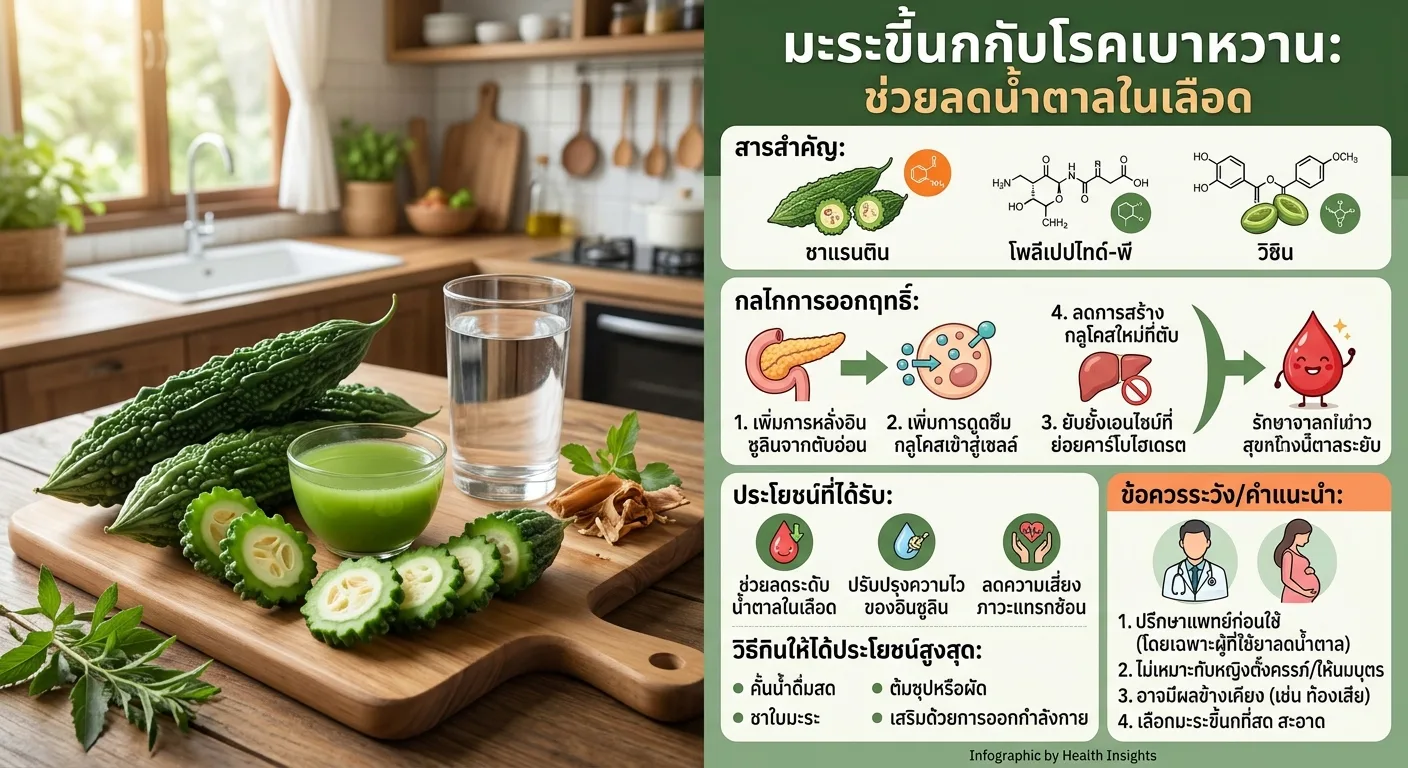
Bitter melon is a traditional vegetable long believed to help lower blood sugar. What does the research show, can it replace medication, and who should avoid it? Here's what you need to know.
What Is Bitter Melon?
Bitter melon (also called bitter gourd), scientific name Momordica charantia, is a bumpy, intensely bitter vegetable. The small Thai variety is even more bitter than the larger Chinese type. It's commonly blanched and served with chili dip, stir-fried, or cooked in clear soups, and it has a long history in traditional medicine across Asia.
Key Compounds Linked to Blood Sugar
Researchers have identified several compounds in bitter melon that may play a role in blood sugar control:
- Charantin, a steroidal glycoside
- Polypeptide-p, a protein with an insulin-like structure, sometimes called "plant insulin"
- Vicine, which has been reported to have glucose-lowering effects
How It May Lower Blood Sugar
Laboratory and animal studies suggest bitter melon compounds may:
- Help cells use glucose more effectively
- Reduce sugar absorption in the gut
- Support the insulin-producing cells of the pancreas
However, results in animals don't necessarily translate to the same effects in people.
What Do Human Studies Show?
Findings
- Some studies found bitter melon slightly lowered fasting blood sugar in people with type 2 diabetes.
- A study in Thailand comparing bitter melon with metformin found it lowered blood sugar modestly, but clearly less effectively than the medication.
Limitations
- Most studies are small, short-term, and use different forms (fresh fruit, juice, powder capsules, extracts).
- Several systematic reviews concluded that evidence is insufficient to recommend bitter melon as a diabetes treatment.
In short, bitter melon can be a good vegetable for people with diabetes as part of their diet, but it cannot replace medication.
Other Benefits of Bitter Melon
- Low in calories, high in fiber — good for weight and blood sugar management
- Rich in vitamin C to support immunity
- Contains various antioxidants
- Affordable and widely available in Thailand
How to Eat Bitter Melon Safely
- Eat it as a vegetable in meals — blanched with chili dip, stir-fried with egg, or stuffed in clear soup is the safest way.
- Reduce bitterness by removing seeds and pith, then soaking in salt water or blanching before cooking.
- Avoid large amounts over long periods, especially concentrated juice or capsules.
- If using supplements, choose registered, quality-assured products and always consult a doctor first.
Important Precautions
Low blood sugar (hypoglycemia)
People taking diabetes medication or insulin who also eat large amounts of bitter melon may experience dangerously low blood sugar. Watch for a racing heart, sweating, shaking, dizziness, or confusion.
G6PD deficiency
Vicine in bitter melon seeds may trigger red blood cell breakdown in people with G6PD deficiency, which is relatively common in Thailand. People with this condition should avoid it or consult a doctor first.
Others who should avoid it
- Pregnant women — bitter melon has been reported to stimulate uterine contractions
- Breastfeeding women
- Young children, especially the seeds and red seed coverings of ripe fruit
- People about to have surgery should stop beforehand, as it may affect blood sugar
- Anyone who experiences stomach pain or diarrhea after eating it should stop
What Matters More in Managing Diabetes
- Take medication as prescribed — never stop or reduce it on your own
- Control your diet: cut refined carbs and sugar, focus on vegetables and protein
- Exercise regularly
- Monitor blood sugar and keep your doctor's appointments
- Always tell your doctor about any herbs or supplements you take
Conclusion
Bitter melon is a nutritious traditional vegetable, and research suggests it may lower blood sugar slightly. However, it's less effective than diabetes medication, and evidence isn't strong enough to use it as treatment. Eating bitter melon as part of meals alongside prescribed treatment is safe for most people, but concentrated extracts or large amounts should always be discussed with a doctor first.