Tomatoes and an Enlarged Prostate: Can Lycopene Really Help? What the Research Says
Published 22 October 2026 · 3 min read
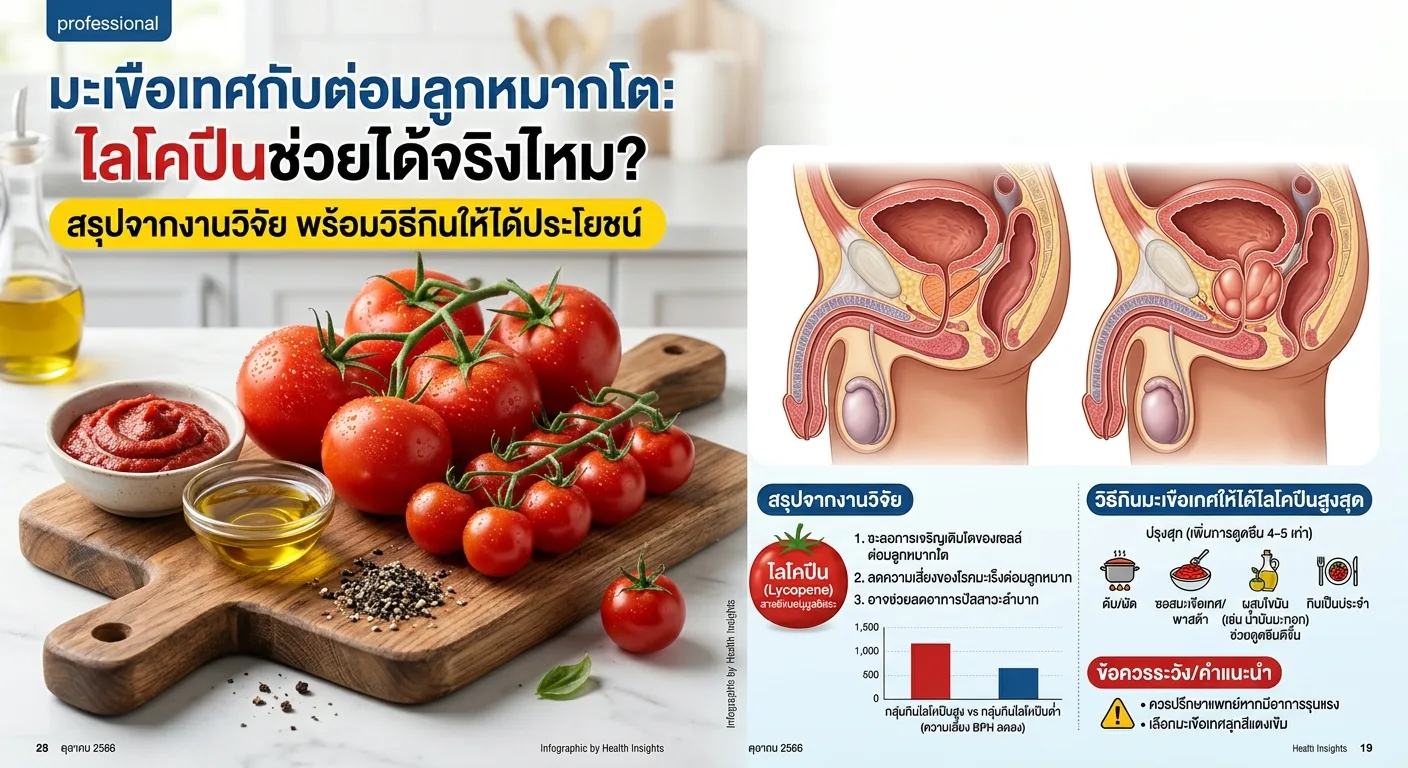
Tomatoes are rich in lycopene, an antioxidant researchers have studied for its link to prostate health. Here's what the science shows, how to eat tomatoes for maximum benefit, and what they can't do.
What Is an Enlarged Prostate?
Benign Prostatic Hyperplasia (BPH) is a non-cancerous enlargement of the prostate gland. It's common in men over 50 and becomes more frequent with age. As the prostate grows, it can press on the urethra and cause urinary symptoms.
Common symptoms
- Frequent urination, especially at night
- Weak or interrupted urine stream, or straining
- A feeling that the bladder isn't fully empty
- Difficulty holding urine
Lycopene: The Key Compound in Tomatoes
Lycopene is a carotenoid that gives tomatoes their red color. It's a powerful antioxidant and is reported to accumulate in prostate tissue at relatively high levels compared with other organs, which is why researchers have been interested in its role in prostate health.
What Does the Research Say?
1. Anti-inflammatory and antioxidant effects
Chronic inflammation and oxidative damage are thought to play a role in BPH. Lycopene has been studied for its potential to reduce these factors.
2. Effects on PSA and prostate size
Some small clinical studies in men with BPH found that those taking lycopene for several months tended to show better PSA levels and slower prostate growth than those taking a placebo.
3. Limitations to keep in mind
- Most studies are small and short-term
- Many used lycopene extracts or combined it with other herbs, rather than ordinary tomato consumption
- There is no evidence that tomatoes cure BPH or shrink the prostate
In short, tomatoes are a supportive part of a healthy diet, not a treatment.
Other Benefits of Tomatoes for Middle-Aged Men
- Vitamins C and A support the immune system
- Potassium helps maintain healthy blood pressure
- Low in calories, high in fiber — useful for weight management, since obesity is one risk factor for worse BPH symptoms
- Heart-friendly thanks to multiple antioxidants
How to Get the Most Lycopene from Tomatoes
- Cook them. Heat makes lycopene easier for the body to absorb than raw tomatoes — try homemade tomato sauce, tomato soup, or sautéed tomatoes.
- Pair with healthy fat. Lycopene is fat-soluble, so cook with olive oil or eat tomatoes with a little fat.
- Choose ripe, deep-red tomatoes. They usually contain more lycopene than unripe ones.
- Watch processed products. Some store-bought sauces and juices are high in sodium and sugar, so check the label.
Easy Recipe Ideas
- Tomato soup finished with olive oil
- Stir-fried eggs with tomatoes
- Spaghetti with homemade tomato sauce
- Tomato salad drizzled with olive oil
Precautions
- People with acid reflux may find symptoms worsen with large amounts of tomatoes
- Consult a doctor or pharmacist before taking lycopene supplements, especially if you take regular medication
- Don't stop medication or delay seeing a doctor in the belief that tomatoes will treat the condition
When to See a Doctor
Seek medical care promptly if you experience:
- Inability to urinate
- Blood in the urine
- Pain or burning when urinating, or fever
- Urinary symptoms that disrupt sleep or daily life
BPH symptoms can resemble other conditions, including prostate cancer, so a proper medical diagnosis matters most.
Conclusion
Tomatoes are an excellent source of lycopene, and early research suggests it may support prostate health. Eating cooked tomatoes with healthy fats regularly, along with exercise, weight control and routine check-ups, is a safe self-care habit with many benefits, but it should never replace medical treatment.
This article is for general information only and is not medical advice. Please consult a doctor if you have any symptoms.