What Causes Acid Reflux? Understanding the Main Causes of GERD and How to Prevent It
Published 25 October 2026 · 4 min read
Heartburn, sour burps and discomfort after meals may be signs of acid reflux disease. Learn what causes it, which factors make it worse, and how to prevent it before it becomes chronic.
What Is Acid Reflux Disease?
Gastroesophageal reflux disease (GERD) is a condition in which stomach acid or digestive juices frequently flow back into the esophagus, causing irritation or inflammation of the esophageal lining.
Occasional reflux, such as after a large meal, is common. It's considered a "disease" when it happens often enough to disrupt daily life.
Common Symptoms
Typical symptoms
- Burning sensation in the chest or upper abdomen (heartburn)
- Sour or bitter taste in the mouth or throat
- Bloating, fullness and upper abdominal discomfort
- Feeling like food is stuck in the throat
Symptoms outside the esophagus
- Chronic cough, especially at night
- Hoarseness or persistent sore throat
- Constant feeling of phlegm in the throat
- Worsening asthma
Main Causes of Acid Reflux
1. Lower esophageal sphincter dysfunction
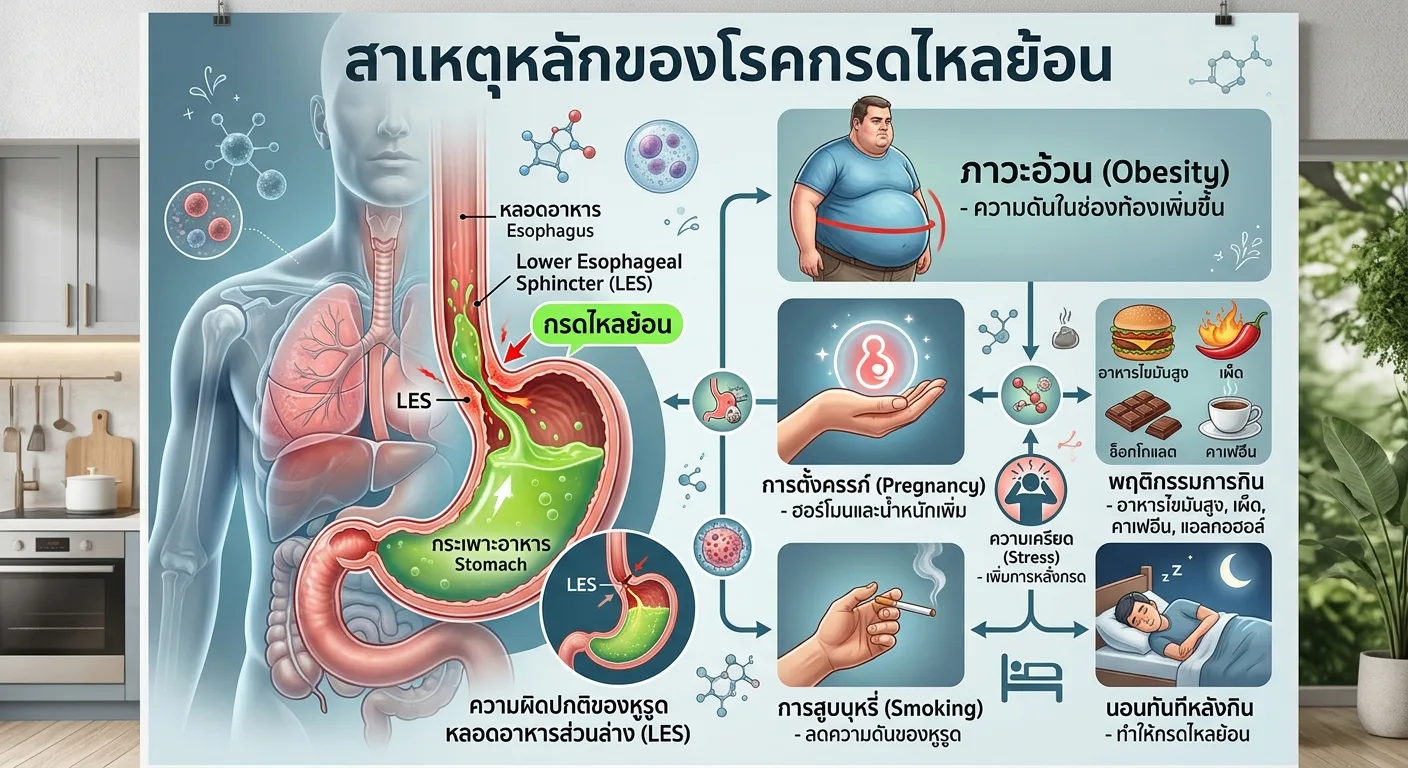
This is the most important cause. Where the esophagus meets the stomach, a ring of muscle called the lower esophageal sphincter (LES) acts like a door: it opens to let food through, then closes to keep acid from flowing back up.
When this sphincter weakens, doesn't close fully, or relaxes more often than normal, acid can easily reflux upward.
2. Hiatal hernia
A hiatal hernia occurs when the upper part of the stomach pushes up through the diaphragm, weakening the body's natural anti-reflux barrier. It's more common in older adults and people who are overweight.
3. Increased abdominal pressure
Extra pressure on the stomach pushes acid up into the esophagus. Causes include:
- Being overweight or obese, especially with belly fat
- Pregnancy
- Tight clothing or belts around the waist
- Heavy lifting or frequent bending after meals
4. Delayed stomach emptying
When the stomach empties food into the intestine slowly, food and acid stay in the stomach longer, increasing the chance of reflux.
Lifestyle Triggers
Eating habits
- Eating large meals or overeating
- Lying down or reclining right after eating
- Late-night meals close to bedtime
- Eating too quickly
Foods and drinks that may trigger symptoms
- Fatty and fried foods
- Very spicy or acidic foods
- Chocolate and mint
- Coffee, tea and other caffeinated drinks
- Carbonated drinks
- Alcohol
Trigger foods vary from person to person, so notice which ones make your symptoms worse.
Smoking
Nicotine relaxes the esophageal sphincter and reduces saliva, which normally helps neutralize acid in the esophagus.
Stress and poor sleep
Stress may not directly increase acid, but it makes the body more sensitive to burning sensations and often worsens eating and sleeping habits.
Medications That May Worsen Symptoms
- NSAID painkillers and aspirin, which irritate the digestive tract
- Some blood pressure medications, such as calcium channel blockers
- Nitrate medications
- Certain sleeping pills or anti-anxiety drugs
- Some osteoporosis medications
Never stop medication on your own. If you suspect a medicine is worsening your symptoms, talk to your doctor or pharmacist.
Complications If Left Untreated
Chronic, untreated acid reflux may lead to:
- Esophagitis, which can develop into ulcers in the esophagus
- Esophageal stricture, causing difficulty swallowing
- Barrett's esophagus, a change in the esophageal lining cells that raises the risk of esophageal cancer
How to Prevent and Reduce Symptoms
- Eat smaller meals spread throughout the day and avoid overeating
- Wait at least 2–3 hours after eating before lying down
- Raise the head of your bed by about 6–8 inches (stacking pillows may be less effective)
- Manage your weight — weight loss clearly reduces symptoms in people who are overweight
- Quit smoking and cut back on alcohol
- Avoid your personal trigger foods
- Avoid tight waistbands, especially after meals
- Manage stress and get enough sleep
When to See a Doctor
See a doctor if you have:
- Reflux symptoms more than twice a week, or lasting several weeks
- Difficulty or pain when swallowing
- Unexplained weight loss
- Vomiting blood or black stools
- New symptoms starting after age 50
If you have chest pain spreading to the arm, jaw or back, with sweating or shortness of breath, go to the hospital immediately, as heart problems can mimic acid reflux.
Conclusion
The main cause of acid reflux disease is dysfunction of the lower esophageal sphincter, worsened by physical factors such as hiatal hernia, excess weight and pregnancy, and by lifestyle factors like large meals, lying down after eating, certain foods, smoking and alcohol. The good news is that many of these factors can be changed. Adjusting your habits early can ease symptoms and prevent long-term complications.
This article is for general information only and is not medical advice. Please consult a doctor if you have any symptoms.